Forget Weight Loss: Help Your Clients Set Smarter Wellness Goals
In today’s fitness, wellness, and corporate health sectors, weight alone is no longer enough. A number on the scale doesn’t reveal the full story of long-term health. Programs that leverage body composition insights consistently outperform traditional weight-centric programs in engagement, retention, and results. This is The Evolt Health Tech Ecosystem Advantage, turning actionable data into smarter strategies that drive outcomes, keep clients motivated, and elevate satisfaction.
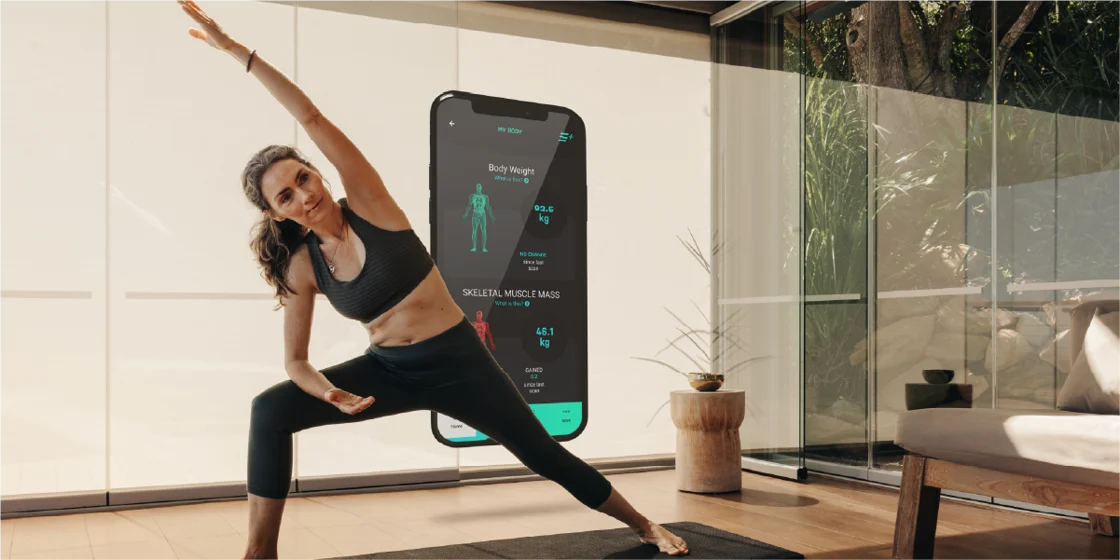
In today’s fitness, wellness, and corporate health sectors, focusing on weight alone is no longer enough. Stepping on a scale gives a number, but it does not tell the story that matters for long-term health. Businesses that help clients, members, or patients focus on body health benchmarks empower them to make meaningful, measurable progress. Metrics such as lean muscle mass, visceral fat, biological age, and segmental balance provide actionable insights that go far beyond the scale.
The Evolt Health Tech Ecosystem: Data That Drives Smarter Decisions
The Evolt Health Tech Ecosystem, anchored by the Evolt 360 Body Composition Scanner, gives operators, wellness programs, and medical teams the tools to move beyond assumptions. By tracking body composition over time, businesses gain a complete view of internal health and the insights needed to guide interventions, optimize programming, and improve outcomes. This is the Ecosystem Advantage. It turns actionable data into smarter strategies that enhance engagement, retention, and client satisfaction.
Why Weight Alone Falls Short
Traditional weight-based goals can mislead clients and programs. Two people with the same BMI can have completely different health risks depending on lean mass, visceral fat, and metabolic markers. Ignoring body composition can lead to muscle loss, slower metabolism, and weaker long-term results. These outcomes impact both performance and engagement.
Weight alone also fails to motivate people. Clients may be working hard yet see little change on the scale, even while losing fat and gaining muscle. Body composition tracking provides tangible proof of progress, keeping motivation high and reinforcing adherence.
Body Health Benchmarks That Matter to Your Business
The Evolt 360 allows operators to track metrics that provide actionable insights for goal setting and program design:
- Lean Body Mass: Maintaining or increasing muscle supports metabolism, strength, and functional performance while reducing long-term health risks
- Visceral Fat Mass: Elevated visceral fat is linked to cardiovascular and metabolic disease, making it a critical focus for prevention
- Segmental Balance: Identifying asymmetries across arms, legs, and torso allows targeted programming, reduces injury risk, and optimizes strength
- Biological Age and Body Wellness Index: Aggregating multiple metrics into a clear score helps track measurable progress and set goals that resonate with clients
Setting Smarter Goals for Clients
Encourage clients to focus on benchmarks that align with meaningful health outcomes rather than weight alone. Establish baselines using lean mass, visceral fat, and bio age, and set SMART goals that are specific, measurable, achievable, relevant, and time bound. For example, increasing lean body mass by 1.5 kilograms in 12 weeks is far more actionable than simply aiming to lose weight.
Regular tracking allows adjustments to training, nutrition, and recovery while providing visible proof of progress. Programs that leverage body composition insights consistently outperform traditional weight-centric programs in engagement, retention, and measurable results.
The Business Case for Body Health Benchmarks
Shifting the focus from weight to body health metrics enhances client satisfaction and demonstrates real value for fitness operators and corporate wellness leaders. Aggregated insights from the Evolt Health Tech Ecosystem can guide corporate wellness initiatives, highlight trends in metabolic health, and enable targeted interventions that reduce absenteeism and improve workforce resilience.
By prioritizing body composition metrics with tools like the Evolt 360, businesses can offer smarter goal setting, measurable outcomes, and personalized guidance. This approach empowers clients, supports long-term adherence, and strengthens your position in a competitive wellness marketplace.
References
Fox, C. S., Massaro, J. M., Hoffmann, U., Pou, K. M., Maurovich‑Horvat, P., Liu, C. Y., Vasan, R. S., Murabito, J. M., Meigs, J. B., Cupples, L. A., D’Agostino, R. B., Sr., & O’Donnell, C. J. (2007). Abdominal visceral and subcutaneous adipose tissue compartments: Association with metabolic risk factors in the Framingham Heart Study. Circulation, 116(1), 39‑48. https://doi.org/10.1161/CIRCULATIONAHA.106.675355
Després, J.‑P. (2012). Body fat distribution and risk of cardiovascular disease: An update. Circulation, 126(10), 1301‑1313. https://doi.org/10.1161/CIRCULATIONAHA.111.067264
Heymsfield, S. B., Gonzalez, M. C., Lu, J., Jia, G., & Zheng, J. (2014). Skeletal muscle mass and quality: Evolution of modern measurement concepts in the context of sarcopenia. Proceedings of the Nutrition Society, 73(4), 412‑419. https://www.cambridge.org/core/journals/proceedings-of-the-nutrition-society/article/skeletal-muscle-mass-and-quality-evolution-of-modern-measurement-concepts-in-the-context-of-sarcopenia/3AA70B0C0FDDF1BDA7B7B2B5131533CD
Schoenfeld, B. J. (2010). The mechanisms of muscle hypertrophy and their application to resistance training. Journal of Strength and Conditioning Research, 24(10), 2857‑2872. https://pubmed.ncbi.nlm.nih.gov/20847704/
Healthline. (n.d.). What are SMART fitness goals? https://www.healthline.com/health/fitness/smart-fitness-goals
Concordia University. (n.d.). Step 1: Set a SMART goal. https://www.concordia.ca/cunews/offices/provost/health/topics/behavioural-change/SMART-goals.html
Related posts

HCF Launches New Corporate Wellness Fit Tech Offering
Sydney Fitness Show 2018